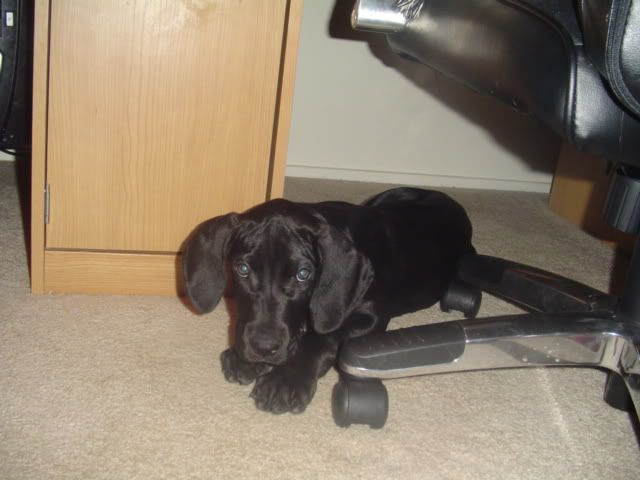
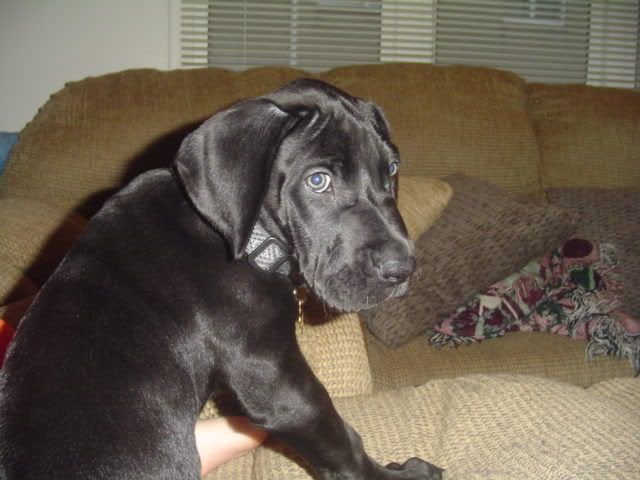
I've been feeling the need to do some fun, non informative posts. Hehe. I thought I would do a post with some of our favorite pics of Gweck and Beans. There are a lot so brace yourself. I figured I don't have a lot of them up on the website and I love to show them off.
We got Gweck when he was 4 months old. A family was giving him up and we were more than willing to take him and bring him up in our family. They gave us a few puppy pictures from when he was brand spanking new,
We got Beans when he was 2.5 years old (Oct 2006). He was super skinny, we put a little weight on him and he's looking much better. He and Gweck are best buds, it's amazing how well they get along.
Sunday, April 13, 2008
Tuesday, March 18, 2008
Do You Feed Nutro? Think again
Consumer Affairs Nutro Info.
If the first recall didn't scare you enough (which it should have!) then hopefully this will. There are REALLY great healthy brands of pet food out there. Please switch! Go to your local pet food store (NOT a big name one) and read the ingredients. Do your pet a favor and care about what goes into them! I'll post another thread to explain how to read the back of dog/cat food bags soon.
Julie
Tuesday, November 27, 2007
Deck the Halls!
Hey everyone! Christmas is just around the corner and I'm sure some of you have started decorating. I just thought I'd post about some safety concerns when decorating for the holidays!
For cat owners, click here or read below:
Overview:
Christmas is an exciting time for the family, but it always pays to take some extra precautions with our pets. There are many dangers around, below are some suggestions on how to ensure your cat stays safe during the Christmas period.
Christmas Tree/Decorations
The only fool proof way to keep your cat away from your Christmas tree is to put the tree in a room the cat can't access. Unfortunately, this is often not practical. So the next best solution is to make the tree as safe as possible. Real Christmas trees are more dangerous to cats than fake plastic ones. Pine needles can puncture internal organs if eaten, they are also toxic to cats. If you do have a real tree, make sure the drink stand has plenty of water to prevent the tree drying out & losing needles. It is important that your cat isn't able to get to this water & drink it as it could result in poisoning. Ensure the tree has a good solid base so it won't easily be knocked over by your cat. Try not to have the tree near furniture & or shelves which the cats could use to jump onto the tree.
Be careful with tinsel, if you must have it on your tree, place it at the top of the tree where the cat is less likely to be able to get at it. Tinsel can be caught around the base or move down to the intestines & stomach & cause a blockage, which will result in emergency (and costly) surgery to remove it. A safer alternative are the strands of beads. Ornaments should be securely attached to the tree to prevent them being knocked off. Also place delicate ornaments up high where they're less likely to be knocked off & broken. When there is nobody around, unplug Christmas lights, you may want to try applying a cat repellent such as bitter apple to the lights to deter your cat from chewing the wires, obviously if this was to happen it could cause a fatal electric shock.
Artificial snow is toxic to cats, so is best avoided.
Candles are especially popular over the Christmas holiday period, be careful to make sure your cat can't get close to lit candles.
Please note, your cat isn't a novelty item & it's dangerous to try & decorate your cat with ribbons etc.
Plants
Holly, mistletoe, poinsettias are all popular plants to have in the home at Christmas, especially in the northern hemisphere. These plants are toxic to cats so should be placed where your cat can't get to them. Please see our page on common household toxins for an extensive list on toxic & non toxic plants.
Food/Sweets/Chocolate
Many cat owners enjoy giving their cat the occasional treat of "human" food & generally this doesn't harm the cat. However, it is important to remember that some foods which are fine for humans to eat can be toxic to cats. The odd sliver of chicken or turkey (off the bone) is fine, however it really isn't a good idea to give them large quantities of such food as this can lead to gastrointestinal problems. Never give your cat cooked chicken or turkey bones, these bones can splinter & can become lodged in your cat's throat or puncture the intestines & stomach. - Chocolate is toxic to cats, the darker the chocolate, the more toxic. Chocolate contains both caffeine & theobromine, which are both toxic. If you suspect your cat has eaten chocolate watch for signs of restlessness & vomiting, if in doubt, see your vet.
Cats will often scavenge for food in the garbage so be aware that if you've covered your turkey with foil & thrown it in the bin, your cat may drag it out & chew on it which could make the cat sick. Cooked turkey bones will also attract your cat. Be aware of this & if possible, take your food scraps etc., to your outside bin.
Xmas ribbons/wrap
Ribbons etc., pose the same problem as tinsel, if eaten, it may lead to intestinal blockages. It's important to ensure all ribbons/wrap etc., are safely disposed of.
Visitors
Some cats love the attention of visitors, others find strangers in their house stressful. Christmas is often a busy time with visitors coming & going. Be mindful of your cat's feelings & give the cat the option of somewhere quiet to escape to should the need arise, this is particularly important if your friends & relatives have young children.
Holidays
If you are going away on holiday, you have several options for your cat. You may choose to put your cat in a boarding cattery while you are gone. It is best to check out the premises prior to taking your cat there so you can ensure the cattery meets your standards. Any reputable boarding cattery will insist your cat is up to date on it's vaccinations, this is important for the well being of your cat & all other cats they have boarding there. Many vets also do boarding for cats but in my opinion this isn't ideal for more than a few days as their cages tend to be much smaller than those you'd expect to find in a boarding cattery.
There are a growing number of pet sitters available these days. They will come over once or twice a day to feed & play with your cat & to clean the litter tray. I find this most suitable when going away for a few days.
If you are going away for an extended period of time you may want to consider asking a friend or relative to house sit.
Toys
When buying toys for your cat, make sure you thoroughly check them first. Similar precautions should be taken with your cat's toys as you'd take buying a toy for a young child. Make sure there is nothing glued on that the cat can pull off & swallow. As the toy will quite likely be chewed on, ensure that it's made from a non-toxic substance. There are many wand like toys on the market which most cats love, these should be put away safely when not in use because the cat could become tangled on the string. Any toy that is small enough for your cat to swallow is dangerous & should be avoided.
Kittens as gifts
Buying a kitten as a gift is fine as long as the person receiving the kitten has asked for a pet & knows that owning a cat is quite likely to be a 15-20 year responsibility. Never buy a pet as a surprise gift for somebody. Also, because Christmas is usually such a chaotic time, it is best to try & arrange to collect your kitten after Christmas to avoid undue stress on the animal. Please, if you are considering buying a pet as a gift, really think it through before you do so. Pet ownership is a big responsibility & shouldn't be entered into lightly. Any shelter worker will tell you that their most busy time of the year is just after Christmas people bring them unwanted pets. Don't add to the problem by buying a pet for somebody on a whim.
For dog owners, click here or read below:
The “12 Pet Tips of Christmas” – A safety guide for Pet Owners During the
Holiday Season
Let the countdown begin! Here are the ”twelve tips of Christmas” to help keep your dog (or any other pets) safe during the eventful holiday season. They will keep your holidays safe, healthy, and happy!
1. Anticipate your guest's arrivals and confine your dog to prevent it from escaping or worse yet “soiling” your guest’s clothes with an unwanted jump.
2. Reduce your dog's stress by maintaining its regular feeding and exercise routine. Develop a routine for your dog during holiday parties. A special treat in a special room of your house works well.
3. Put packages out of reach! Dogs who smell food in a package will rip it open. Food is the number one holiday hazard for dogs. The foods that we eat can cause havoc on an animal's intestines. Put away children's toys after they are opened. Ingested toys can cause choking and may have to be removed through surgery.
4. Tell guests not to share indulgences with your pet. Poultry skin, fat trimmings, rich gravies, and buttery sauces can cause severe vomiting, diarrhea, or even worse, a life threatening inflammation of the pancreas. Also, remember that an ounce of alcoholic beverage can put a small dog into a coma.
5. Stow chocolate candy or baking ingredients out of reach. Chocolate is the most common toxicity treat during the holidays. Small amounts cause problems. Larger amounts can cause above normal heart rhythms, nervous system malfunctions, and even death. Secure your garbage in bins with tight lids. (This is a good habit to get into all year!) A dog can chew up holiday garbage, which can result in intestinal problems.
6. Buy only decorating products (tree water preservatives and artificial snow) that are labeled non-toxic.
7. Secure large trees to the wall to prevent tipping, or consider a smaller tree that can fit on a tabletop.
8. Remember that stomach problems can be caused by popcorn and gumdrops. Avoid using these strings of edible decorations.
9. Fasten all your tree decorations securely, with the more fragile ones at the top. Dogs who chew these can suffer cuts in their mouth from broken ornaments.
10. Return paper and other gift wrapping materials to their storage places after gift wrapping is finished.
11. Place holiday plants out of reach and vacuum often. Poinsettia can cause drooling, oral pain, and vomiting. Mistletoe causes vomiting, labored breathing, shock, and death from cardiovascular collapse. When animals eat the needles from real or fake trees, they can also get intestinal blockage.
12. Display candles on high shelves to avoid painful burns and singed Whiskers and make sure that cords are tucked out of reach. Electrocution can put a huge damper on Holiday festivities.
Important Numbers to have on hand:
Chicago Emergency Vet
773.281.7110
3123 N Clybourn
ASPCA Poison Control
(888) 426-4435
A $55 consultation fee may be applied to your credit card.
There are plenty of dangerous things your pets can get into, ingest etc. Please be careful this Christmas.
Cheers and Happy Holidays!
Julie

For cat owners, click here or read below:
Overview:
Christmas is an exciting time for the family, but it always pays to take some extra precautions with our pets. There are many dangers around, below are some suggestions on how to ensure your cat stays safe during the Christmas period.
Christmas Tree/Decorations
The only fool proof way to keep your cat away from your Christmas tree is to put the tree in a room the cat can't access. Unfortunately, this is often not practical. So the next best solution is to make the tree as safe as possible. Real Christmas trees are more dangerous to cats than fake plastic ones. Pine needles can puncture internal organs if eaten, they are also toxic to cats. If you do have a real tree, make sure the drink stand has plenty of water to prevent the tree drying out & losing needles. It is important that your cat isn't able to get to this water & drink it as it could result in poisoning. Ensure the tree has a good solid base so it won't easily be knocked over by your cat. Try not to have the tree near furniture & or shelves which the cats could use to jump onto the tree.
Be careful with tinsel, if you must have it on your tree, place it at the top of the tree where the cat is less likely to be able to get at it. Tinsel can be caught around the base or move down to the intestines & stomach & cause a blockage, which will result in emergency (and costly) surgery to remove it. A safer alternative are the strands of beads. Ornaments should be securely attached to the tree to prevent them being knocked off. Also place delicate ornaments up high where they're less likely to be knocked off & broken. When there is nobody around, unplug Christmas lights, you may want to try applying a cat repellent such as bitter apple to the lights to deter your cat from chewing the wires, obviously if this was to happen it could cause a fatal electric shock.
Artificial snow is toxic to cats, so is best avoided.
Candles are especially popular over the Christmas holiday period, be careful to make sure your cat can't get close to lit candles.
Please note, your cat isn't a novelty item & it's dangerous to try & decorate your cat with ribbons etc.
Plants
Holly, mistletoe, poinsettias are all popular plants to have in the home at Christmas, especially in the northern hemisphere. These plants are toxic to cats so should be placed where your cat can't get to them. Please see our page on common household toxins for an extensive list on toxic & non toxic plants.
Food/Sweets/Chocolate
Many cat owners enjoy giving their cat the occasional treat of "human" food & generally this doesn't harm the cat. However, it is important to remember that some foods which are fine for humans to eat can be toxic to cats. The odd sliver of chicken or turkey (off the bone) is fine, however it really isn't a good idea to give them large quantities of such food as this can lead to gastrointestinal problems. Never give your cat cooked chicken or turkey bones, these bones can splinter & can become lodged in your cat's throat or puncture the intestines & stomach. - Chocolate is toxic to cats, the darker the chocolate, the more toxic. Chocolate contains both caffeine & theobromine, which are both toxic. If you suspect your cat has eaten chocolate watch for signs of restlessness & vomiting, if in doubt, see your vet.
Cats will often scavenge for food in the garbage so be aware that if you've covered your turkey with foil & thrown it in the bin, your cat may drag it out & chew on it which could make the cat sick. Cooked turkey bones will also attract your cat. Be aware of this & if possible, take your food scraps etc., to your outside bin.
Xmas ribbons/wrap
Ribbons etc., pose the same problem as tinsel, if eaten, it may lead to intestinal blockages. It's important to ensure all ribbons/wrap etc., are safely disposed of.
Visitors
Some cats love the attention of visitors, others find strangers in their house stressful. Christmas is often a busy time with visitors coming & going. Be mindful of your cat's feelings & give the cat the option of somewhere quiet to escape to should the need arise, this is particularly important if your friends & relatives have young children.
Holidays
If you are going away on holiday, you have several options for your cat. You may choose to put your cat in a boarding cattery while you are gone. It is best to check out the premises prior to taking your cat there so you can ensure the cattery meets your standards. Any reputable boarding cattery will insist your cat is up to date on it's vaccinations, this is important for the well being of your cat & all other cats they have boarding there. Many vets also do boarding for cats but in my opinion this isn't ideal for more than a few days as their cages tend to be much smaller than those you'd expect to find in a boarding cattery.
There are a growing number of pet sitters available these days. They will come over once or twice a day to feed & play with your cat & to clean the litter tray. I find this most suitable when going away for a few days.
If you are going away for an extended period of time you may want to consider asking a friend or relative to house sit.
Toys
When buying toys for your cat, make sure you thoroughly check them first. Similar precautions should be taken with your cat's toys as you'd take buying a toy for a young child. Make sure there is nothing glued on that the cat can pull off & swallow. As the toy will quite likely be chewed on, ensure that it's made from a non-toxic substance. There are many wand like toys on the market which most cats love, these should be put away safely when not in use because the cat could become tangled on the string. Any toy that is small enough for your cat to swallow is dangerous & should be avoided.
Kittens as gifts
Buying a kitten as a gift is fine as long as the person receiving the kitten has asked for a pet & knows that owning a cat is quite likely to be a 15-20 year responsibility. Never buy a pet as a surprise gift for somebody. Also, because Christmas is usually such a chaotic time, it is best to try & arrange to collect your kitten after Christmas to avoid undue stress on the animal. Please, if you are considering buying a pet as a gift, really think it through before you do so. Pet ownership is a big responsibility & shouldn't be entered into lightly. Any shelter worker will tell you that their most busy time of the year is just after Christmas people bring them unwanted pets. Don't add to the problem by buying a pet for somebody on a whim.
For dog owners, click here or read below:
The “12 Pet Tips of Christmas” – A safety guide for Pet Owners During the
Holiday Season
Let the countdown begin! Here are the ”twelve tips of Christmas” to help keep your dog (or any other pets) safe during the eventful holiday season. They will keep your holidays safe, healthy, and happy!
1. Anticipate your guest's arrivals and confine your dog to prevent it from escaping or worse yet “soiling” your guest’s clothes with an unwanted jump.
2. Reduce your dog's stress by maintaining its regular feeding and exercise routine. Develop a routine for your dog during holiday parties. A special treat in a special room of your house works well.
3. Put packages out of reach! Dogs who smell food in a package will rip it open. Food is the number one holiday hazard for dogs. The foods that we eat can cause havoc on an animal's intestines. Put away children's toys after they are opened. Ingested toys can cause choking and may have to be removed through surgery.
4. Tell guests not to share indulgences with your pet. Poultry skin, fat trimmings, rich gravies, and buttery sauces can cause severe vomiting, diarrhea, or even worse, a life threatening inflammation of the pancreas. Also, remember that an ounce of alcoholic beverage can put a small dog into a coma.
5. Stow chocolate candy or baking ingredients out of reach. Chocolate is the most common toxicity treat during the holidays. Small amounts cause problems. Larger amounts can cause above normal heart rhythms, nervous system malfunctions, and even death. Secure your garbage in bins with tight lids. (This is a good habit to get into all year!) A dog can chew up holiday garbage, which can result in intestinal problems.
6. Buy only decorating products (tree water preservatives and artificial snow) that are labeled non-toxic.
7. Secure large trees to the wall to prevent tipping, or consider a smaller tree that can fit on a tabletop.
8. Remember that stomach problems can be caused by popcorn and gumdrops. Avoid using these strings of edible decorations.
9. Fasten all your tree decorations securely, with the more fragile ones at the top. Dogs who chew these can suffer cuts in their mouth from broken ornaments.
10. Return paper and other gift wrapping materials to their storage places after gift wrapping is finished.
11. Place holiday plants out of reach and vacuum often. Poinsettia can cause drooling, oral pain, and vomiting. Mistletoe causes vomiting, labored breathing, shock, and death from cardiovascular collapse. When animals eat the needles from real or fake trees, they can also get intestinal blockage.
12. Display candles on high shelves to avoid painful burns and singed Whiskers and make sure that cords are tucked out of reach. Electrocution can put a huge damper on Holiday festivities.
Important Numbers to have on hand:
Chicago Emergency Vet
773.281.7110
3123 N Clybourn
ASPCA Poison Control
(888) 426-4435
A $55 consultation fee may be applied to your credit card.
There are plenty of dangerous things your pets can get into, ingest etc. Please be careful this Christmas.
Cheers and Happy Holidays!
Julie
Monday, October 29, 2007
Happy Halloween!
Ok, this post is going to be fluffy and full of fun! This past weekend—well Sunday—Aaron and I worked our butts off on making Halloween costumes for the boys. I love making them costumes and I make sure I don't do anything like dye their fur (not that you could dye black fur) or do anything that could be harmful and/or permanent. So without further ado...
Mr. Benito Beans, the scary spider web covered in spiders!

And Gweck, the cow "moooo, eat more chicken!" hahahha

We hope you have a fantastic, fun and safe Halloween! Don't forget to put all the candy you and your family collect from trick-or-treating in a safe, dog free area. Also be careful on Halloween of people dressed in costumes that might scare your pooch!
Woof,
Julie
Monday, September 24, 2007
To Choke or Not to Choke
I'm talking about collars here. I have been walking around a lot lately (go figure!) and I have been noticing how many people are either: 1) using a flat collar on their dog who is choking; 2) using a training device inappropriately; or 3) using the totally wrong training collar/device all together. So I want to give a little advice on this. If there is a constant tension on the leash when you are walking your dog then I would say you need to work on training with your dog and yourself.
I swear there is not a day that goes by where I don't see a dogs neck being wrenched because the owner is yanking them inappropriately. People need to remember that dogs need to breathe freely. They have feeling and sensations too and that it is really painful for them to have their necks yanked on constantly. I mean try the collar on for yourself and give the leash to a friend to give you a swift tug in the opposite direction (don't really do this cause you might cause permanent damage but hopefully you get the point).
If you crate your dog I wouldn't even leave a buckle collar on when he/she is in there. There are too many horror stories about dogs collars getting stuck to inside of crates, thus suffocating them. It is so easily preventable—take the collar off.
There are OH SO MANY options out there for us to choose from that it can be a little daunting. So I am posting this topic to show you some of what's available and how it's used or a link to a great explanation on how to use it!
Let me show you some training tools out there:
First, the no pull harness from Wiggles, Wags and Whiskers. This is by far my most favorite harness. It fits much better (at least I think it does) than previous no pull harnesses we have used in the past. I love that you can clip the leash to the chest and/or at the back. It has a velvet strap that goes under the armpits which helps prevent chaffing. Overall a great harness.

Next, the Sense-ible harness! Honestly this is one of my favorites. This is a GREAT help when you are training your dog not to pull or if you have a dog that pulls regardless of the training. I like this brand a lot because it's good for short and long coats. The instructions are easy. The only thing is people usually put the harness on wrong. Here's the deal, the ring that is in the center of the front strap is the front of the harness! That goes on at the chest! I swear it does. The whole thought process behind this harness and the one below is that you pull your dog so he/she turns and faces you, you correct then. I.E. "Fido, no pull, heel" and keep walking.

Then there is the Easy Walk Harness, very similar to the Sense-ible except for where you clip your leash. You clip it in the same place but that area is different than on the Sense-ible. I have used this before and on short/fine haired dogs I found it chaffed the underarms. I had to go to the vet to get my boy some ointment. I think for long haired or thick coated dogs that this would work well!

Next is the Gentle Leader. Wait...don't say it. It's NOT a muzzle! This is another great training tool for pullers or semi-aggresso (toughie) dogs. It comes with a great "how to" video and works very well. The only thing is you BETTER NOT yank on it or I will come after you. Also if you go to the park with your dog and let them off leash, take this head halter off.

And then the Halti is another favorite of mine. I use this on my (semi-aggresso) Dane and it works GREAT. I have what you would call a bucking bronco and this really helps me keep him under control. It makes it so I can control which direction Beans (my Dane) goes. Since dogs choose their direction with their heads, you can choose the direction they go! YAY. It's a total arm saver. I use this instead of the Gentle Leader because the Gentle Leader rubbed some fur off of Beans' nose, and the Halti does not! Again, no yanking! Also if you go to the park with your dog and let them off leash, take this head halter off.

The "traditional" harness. This is great for puppies, English Bulldogs and dogs in general. If you EVER get in a sticky situation, at a park, hiking, camping you can just grab the strap down the back and lift them away. You aren't pulling on their neck on walks, therefore keeping their trachea and esophagus perfect and healthy! I do not recommend using this harness on serious pullers because they will pull you ALL over the place like a sled dog! But if your dog is older, smaller, or not a puller, then by all means use it!

Onto the Step in Harness. This is another great harness for puppies and English Bulldogs and such! It's REALLY easy to put on (much easier than the traditional harness). All you need to do is put 1 paw in 1 hole and the other in the other hole and clip up at the back! Again this is a great one for dogs that are smaller, small pullers, or medium sized non-pullers.

Onto the Prong Collar. Lots of people think that this collar is painful but used correctly, it's not. The whole point of the prong collar is you give a slight tug to get your dogs attention and then you correct their behavior. I use this on my other Dane, he doesn't really need it unless we are walking towards our favorite pet stores or the park. But I keep it on so he just knows to behave and it works great. If this collar is used improperly it can most definitely be painful. BUT used correctly and it is a very helpful training tool. You can also buy rubber covers to put on the tip of the prongs if you are still uneasy about using this collar. Definitely take this collar off if take your dog to the park and let it play with other dogs or when your dog is at home or crated.

And lastly the choke collar. I pretty much hate this collar, the reason being almost everyone that doesn't show their dog uses it improperly. They get it way too big and their dog is choking themselves the WHOLE time and this collar causes the MOST damage to a pups throat. If you use one of these I HIGHLY recommend you do your research and even take a class to use it correctly. These are an old school collar for old school thinking and with so many other great options out there to try today I really don't think this is one that needs to be used. That is my honest opinion. Definitely take this collar off if take your dog to the park and let him/her play with other dogs or when your dog is at home or crated.

I have one more thing to mention, retractable leashes, DO NOT USE THEM. They are horrible for numerous reasons:
1. there is constant tension between you and your dog. If the leash is not slack (which a retractable NEVER is, then there is tension.
2. If you live in a city then you have to worry about cars and intersections and retractable leashes make this such a pain.
3. They are choking hazards if it gets wrapped around your dog or another that it's meeting.
4. ROPE BURNS!
5. Don't be lazy, use a 6ft leash and walk with your dog!
Tuesday, September 18, 2007
Leaving Your Dog Unattended
This has been driving me CRAZY. Why do people INSIST on leaving their dog in a car or tied up outside of an establishment by themselves?! If anyone did this to their child it would be a crime but since it technically is not a crime to do it to their dog people do it, a lot. It's ridiculous! I swear if I see one more dog tied up because the owner is TOO LAZY to walk their dog, bring them home then go to the store or get coffee, I will GO NUTS!
Reasons to NOT tie your dog up:
1. THEY CAN GET STOLEN and used for bait for fighting or put in a lab for testing.
2. It's too hot out, resulting in damage i.e burned paw pads, overheating etc.
3. It's too cold out resulting in damage i.e a cold, fever, frost bit paw pads etc.
4. They could get tormented by people or other dogs.
5. You wouldn't tie up your child why do it to your pet?
6. It's just not safe.
Reasons to NOT leave your pet in your car:
1. Too hot.
2. Too cold.
3. It's just not safe.
Here's a study that was done on how fast and how much cars heat up:
VEHICLE HEATING DYNAMICS
The atmosphere and windows are relatively "transparent" to the sun's shortwave radiation and are warmed little. The shortwave energy does however warm objects that it strikes. These objects (e.g., dashboard, steering wheel, childseat) heat the adjacent air by conduction and convection and also give off longwave radiation which is very efficient at warming the air trapped inside a vehicle.
CONCLUSIONS
Average elapsed time and temperature rise
10 minutes ~ 19 deg F
20 minutes ~ 29 deg F
30 minutes ~ 34 deg F
60 minutes ~ 43 deg F
1 to 2 hours ~ 45-50 deg F
"Cracking" the windows had little effect
Vehicle interior color probably biggest factor
"Parents and caregivers need to get the word out that a car is not a babysitter...
but it can easily become an oven"
Please think twice the next time you leave your home with your dog. Don't tie them up or leave them in your car. There are way more cons than pros and you can't ever replace your pet. No two are alike. Is that newspaper, coffee etc. worth the life of your companion?...I didn't think so.
Sunday, July 29, 2007
Been Slacking Big Time!
Hey all!
Julie here, I am really sorry I haven't posted a new blog. I think I have been in a blog funk. I have plenty of topics to write about but for some reason I have not been motivated to write! I am going to try and get on track asap! Please check back soon!
Thanks!
Julie
Julie here, I am really sorry I haven't posted a new blog. I think I have been in a blog funk. I have plenty of topics to write about but for some reason I have not been motivated to write! I am going to try and get on track asap! Please check back soon!
Thanks!
Julie
Subscribe to:
Posts (Atom)